Categories
Inertial Measurement Units (IMU): Technology, Challenges, and Innovation (Part 1)
In today's rapidly evolving technology landscape, inertial measurement units (IMUs) have become critical components in a variety of fields. Whether you're a tech enthusiast or a professional working in robotics, aviation, or virtual reality, it's important to have a clear understanding of how an IMU works.
Sep 19th,2024
859 Views
In today's rapidly evolving technology landscape, inertial measurement units (IMUs) have become critical components in a variety of fields. Whether you're a tech enthusiast or a professional working in robotics, aviation, or virtual reality, it's important to have a clear understanding of how an IMU works. In this article, we'll delve into the complex workings of an IMU and explore its applications, components, and operating principles. From accelerometers to gyroscopes and magnetometers, we'll reveal the role of each sensor in an IMU and how they work together to provide precise measurements of an object's orientation, velocity, and position.
01Preface
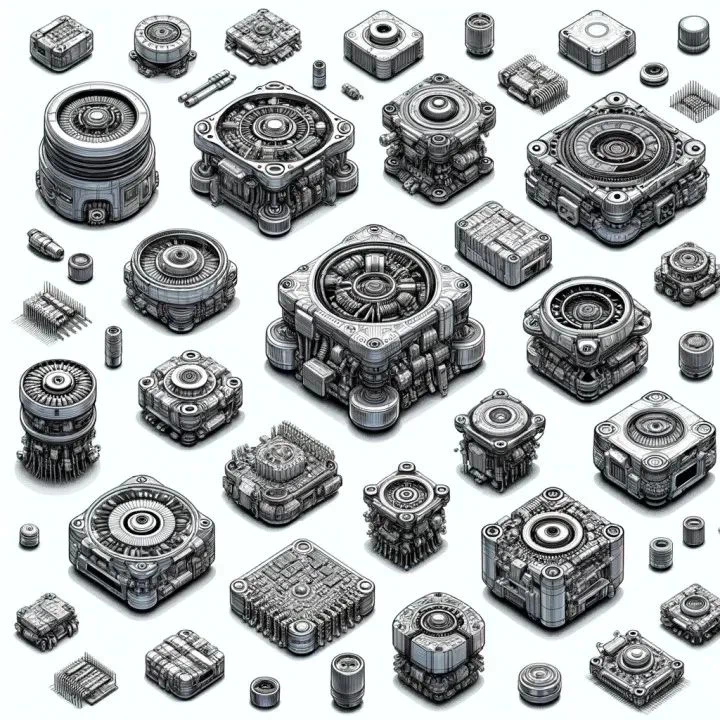
An inertial measurement unit (IMU) is a device that can measure and report attitude (roll, pitch and yaw), velocity, and altitude changes. It is a major component of inertial navigation systems for aircraft, unmanned aerial vehicles (UAVs) and other unmanned systems, missiles, and even satellites. Inertial navigation relies only on sensor inputs directly contained within the platform, without reference to external inputs (such as GNSS), and is therefore not susceptible to tampering or hacking. In an inertial navigation system, the data collected and reported by the IMU is processed by a computer to calculate the current position based on velocity and time, which can provide dead reckoning. Early IMUs consisted of two sensors, an accelerometer and a gyroscope. The accelerometer measures inertial acceleration, while the gyroscope measures angular velocity. These sensors have three degrees of freedom and can measure from three axes. Later, the IMU introduced a magnetometer, which measures the direction of magnetic force and helps improve the readings of the gyroscope.
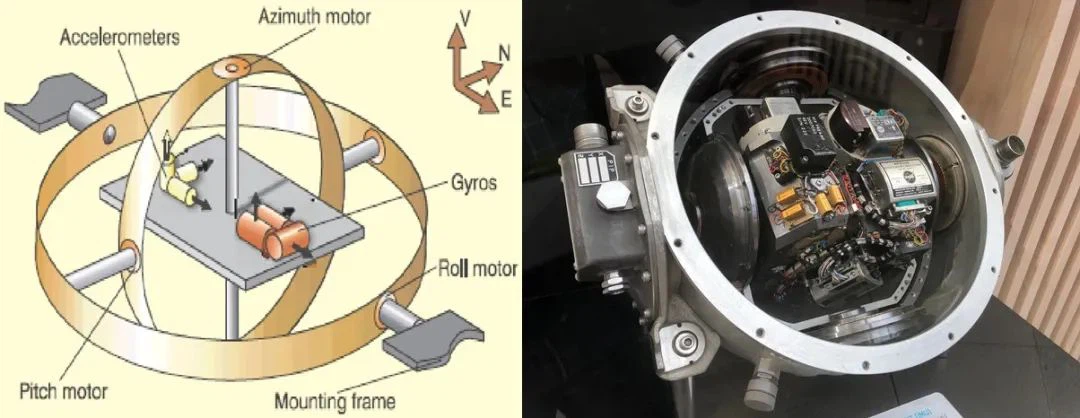
MEMS-based inertial measurement units (IMUs) have been rapidly adopted in consumer electronics such as mobile phones and gaming devices due to their small size, low power consumption and low cost. Applications of consumer MEMS IMUs range from motion detection, virtual augmented reality, optical and electronic image stabilization detection, etc. Over the past few years, the performance of MEMS consumer inertial sensors has continued to improve, opening up new avenues for new and interesting applications.
Currently, ultra-compact consumer IMUs can be used to achieve position and orientation tracking for short periods of time (a few seconds or so), but are not yet suitable for stand-alone navigation (from minutes to hours of navigation). Due to the rapid error accumulation, such devices are used in combination with magnetometers, altimeters and other sensors as a short-term backup system when GPS or other positioning sources are temporarily lost or interrupted.